
By Luke Fletcher | Atlanta, Georgia
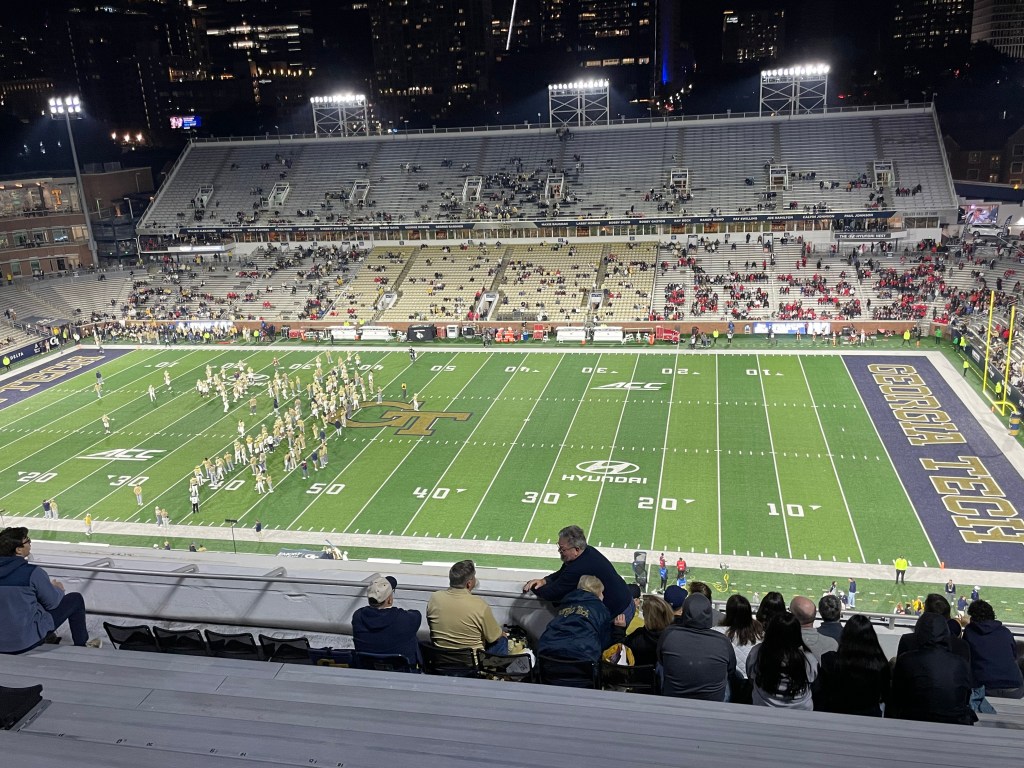
The Score Was 44–17. The Game Wasn’t Even That Close. By any reasonable measure, Georgia Tech’s 44–17 loss to Louisville was more than another disappointing Saturday night. It was another indictment of a football program that appears to have lost its identity, its discipline, and its ability to compete consistently. With the Yellow Jackets sitting at 2–7, the question is no longer simply what went wrong. It is whether Brent Key can fix what he helped build.
Georgia Tech’s nightmare 2026 season hit another low Saturday night at Bobby Dodd Stadium. The Cardinals controlled the line of scrimmage and piled up 456 yards, including 251 on the ground, while Georgia Tech struggled to find an offensive rhythm. After the teams traded field goals, Louisville scored 24 straight points and took a 27–10 lead into halftime. The result was settled well before the final whistle, with Georgia Tech’s only second-half points coming on a late touchdown. This wasn’t a game shaped by one bad call or costly mistake; Georgia Tech was outplayed, out-executed, and appeared unprepared.
A Season That Has Gone Completely Off the Rails
Just one season ago, Georgia Tech was riding high after a 9–4 finish, an 8–0 start, and a surge into the national top 10. Brent Key seemed to have restored the toughness and competitive edge that disappeared during the Geoff Collins era.
Now the Yellow Jackets sit last in the 18-team ACC and could be headed for one of the worst seasons in program history. With Clemson, Wake Forest, and Georgia still on the schedule, their two wins so far leave 2–10 as a real possibility.
That would mark a grim milestone: even during Collins’ disastrous tenure, Georgia Tech never lost 10 games in a season. The team hasn’t finished with fewer than three wins since going 1–10 in 1994. For a coach expected to bring the program back to its traditional standards, the prospect should be deeply troubling.
At Some Point, Everything Leads Back to the Head Coach
Every struggling football program eventually runs out of excuses. Injuries, graduations, transfers, and coaching departures are part of modern college football, but preparation, leadership, discipline, recruiting, player development, and resilience ultimately fall under the head coach. At Georgia Tech, that responsibility belongs to Brent Key.
Key deserves credit for helping rebuild the program after the previous administration, restoring enthusiasm, and giving fans reason to believe. But past progress cannot shield the team from current shortcomings. The biggest concern isn’t just that Georgia Tech is losing, it’s how they are losing. The Yellow Jackets have repeatedly struggled to tackle, control the line of scrimmage, sustain drives, protect the ball, and respond to momentum swings. Against Louisville, the defense recorded no sacks and just one tackle for loss, while struggling to contain an offense that targeted its weaknesses. These recurring problems suggest deeper issues with coaching, preparation, personnel, and execution.
That raises a central question: did Key’s staff overhaul erase the identity that made Georgia Tech competitive? The program once leaned on physical play, offensive creativity, and maximizing its talent. Changes made entering 2026 were meant to build on that foundation, yet Georgia Tech now appears to be moving backward.
That raises an uncomfortable question: When Brent Key reshaped his staff, did Georgia Tech lose more than assistant coaches? Did it also lose the people who knew how to identify and develop talent and build the systems that made the Yellow Jackets competitive?
Fans heard plenty of optimism about the offensive line and running backs before the season. So where did that projected strength go? How did a team built around physical football reach November struggling so badly in the trenches? Was the talent evaluation off, were expectations too high, or has the new staff failed to develop and use its players effectively? The answer is likely some combination of all three.
Alberto Mendoza has shown promise, but he can’t be expected to overcome shaky blocking, an inconsistent running game, and a defense that regularly leaves the offense in a tough spot. Against Louisville, Key rotated Mendoza and Grady Adamson in search of a spark. Mendoza threw for 148 yards and a touchdown; Adamson added 93 yards, a touchdown, and an interception. Neither could get the offense moving consistently.
A quarterback change might provide a short-term lift, but it won’t fix problems that run throughout the team. That raises another question: Who on the current staff has shown they can consistently find and develop talent and build systems that bring out the best in it? If those strengths left with the previous assistants, Key must answer for failing to replace them.
Louisville Demonstrated What Georgia Tech Is Missing
One of the toughest parts of Saturday’s loss was seeing how differently the two teams have handled adversity. Louisville bounced back from a 2–3 start by winning four straight, establishing a clear offensive identity and growing more consistent as the season went on. Against Georgia Tech, quarterback Lincoln Kienholz threw for 182 yards and two touchdowns and ran for 81, while Tre Richardson broke loose for a 52-yard touchdown. Louisville played with purpose; Georgia Tech still looked for answers nine games into the season. One team has responded to challenges by winning, while the other continues to unravel.
The difference isn’t simply talent. It is coaching, preparation, development, and execution.
Coach Key Is Angry. But Anger Is Not a Plan.
After the loss, Brent Key made no attempt to hide his frustration. “I am damn pissed off. Damn pissed off,” he said at his postgame news conference. He admitted the team’s performance was embarrassing and took responsibility for the program’s shortcomings. That accountability matters, but Georgia Tech fans need more than angry words. They need proof that the staff understands what’s gone wrong and has a credible plan to fix it. Key has acknowledged that the problems go beyond one game or a week of preparation, and that staff evaluations and future planning are underway. Now those reviews must lead to real decisions: change a failing defensive scheme, adapt the offense to its personnel, improve recruiting evaluations, replace assistants who aren’t developing players, and, if the culture has slipped, take responsibility for restoring it.
The Geoff Collins Comparison Is Becoming Unavoidable
No Georgia Tech fan wants to relive the Geoff Collins era, but the comparison is getting harder to avoid. Collins went 10–28 in just over three seasons, as the program struggled with blowout losses, uneven player development, and a clear identity.
Brent Key was brought in to change that direction, and for a while, it looked as though he had. Now, though, Georgia Tech could finish 2–10—a worse single-season record than any of Collins’ teams managed.
That doesn’t erase Key’s earlier progress or make the two tenures the same. But it does show how quickly momentum can fade when coaching, recruiting, development, and execution fall out of sync.
The real danger isn’t just another losing season. It’s slipping back into a familiar cycle: offseason promises of better recruiting, sharper preparation, stronger players, and more physical football, followed by the same problems on Saturdays.
Three Games Remain. The Bigger Questions Are About 2027.
Georgia Tech still has Clemson, Wake Forest, and Georgia left on the schedule, but after the Yellow Jackets’ recent performances, winning any of them will take a major turnaround.
Even so, the final three games may matter less than the decisions ahead. Georgia Tech needs to assess its coaching staff, recruiting approach, transfer portal targets, and the offensive and defensive identities it wants to build for 2027. Brent Key must decide whether his staff can deliver the program he promised, while the administration must determine whether he has a convincing plan to reverse the slide.
Key’s love for Georgia Tech is clear, and loyalty to a coach who cares about the Institute is understandable. But passion isn’t enough. Winning requires strong coaching, recruiting, player development, preparation, and discipline—and the willingness to admit when something isn’t working and make tough changes.
The Bottom Line: This Is Brent Key’s Program
Georgia Tech’s 44–17 loss to Louisville was more than another setback in a disappointing season. It highlighted a program that no longer shows the qualities that once made it competitive: physicality, discipline, consistent player development, and the ability to respond to adversity. Brent Key inherited a struggling team, helped rebuild its credibility, and earned the chance to create something lasting. But he also shaped the coaching staff, roster, and direction. He deserves credit when those choices pay off and accountability when they don’t.
At some point, preparation, leadership, discipline, talent evaluation, and a team’s response to adversity all lead back to the head coach. Georgia Tech has reached that point. Nobody seriously questions Brent Key’s commitment to the program anymore.
The real question is whether he can make the personnel moves, coaching changes, and strategic adjustments needed to turn things around after one season of sharp decline. At 2–7, with Clemson, Wake Forest, and Georgia still on the schedule, this is more than a disappointing year, it’s a crisis of direction and the responsibility for fixing it belongs squarely with Brent Key. Go Jackets!


Leave a Reply