
By Luke Fletcher Ft Collins, Co
When the Pac-12 came for the Mountain West, most people around college athletics assumed the outcome was already decided. Five schools were leaving. The conference looked vulnerable. The money gap seemed impossible to overcome. And after what happened to the old Pac-12, it felt like another western league was about to disappear into the chaos of realignment.
Instead, the Mountain West survived. Yes there were talks about some members merging with Conference USA, while Air Force explored the American Athletic Conference. However nothing panned out in those short talks, and instead the Mountain West leadership decided to try and survive, it rebuilt itself into something that may ultimately look smarter, leaner and more modern than anyone expected. And a lot of that traces back to the steady leadership of Commissioner Gloria Nevarez.
The turning point came when the Pac-12 targeted five to seven Mountain West schools as part of its rebuild. Ultimately, Boise State, Colorado State, Fresno State, San Diego State and Utah State all decided to join the Pac-12, leaving many wondering whether the Mountain West could even remain viable.
What made the situation even more contentious was the backdrop. The two conferences had previously signed a scheduling and partnership agreement that included anti-poaching language and financial penalties tied to member departures. The Mountain West has maintained that the Pac-12 ultimately ignored both the spirit and terms of that agreement when it pursued schools and eventually had the disloyal five decide to leave the Mountain West and join the Pac-12. The Pac-12 has resisted paying the full amount of the agreed-upon poaching fees from the start.
For a moment, it genuinely looked like the Mountain West was finished.
But Nevarez never allowed the league to panic. In many ways, this became the defining test of her tenure as commissioner. Instead of making desperate moves, the Mountain West focused on preserving the schools that stayed loyal while building a conference that looked different from the traditional model.
One of the most fascinating parts of the Mountain West rebuild is how aggressively the league rewarded the schools that stayed.
The conference structured retention incentives around the original $61 million fee pool tied to the Pac-12 departures, while another disputed $55 million remains tied up in litigation. Those funds dramatically boost the long-term outlook for schools like Air Force, UNLV, Nevada and Wyoming. The retention and exit fees collected from departing schools are distributed to the holdover institutions based on the following agreed-upon percentages: 24.5% to both Air Force and UNLV; 11.5% to Nevada, New Mexico, San Jose State and Wyoming; and 5% to Hawaii.
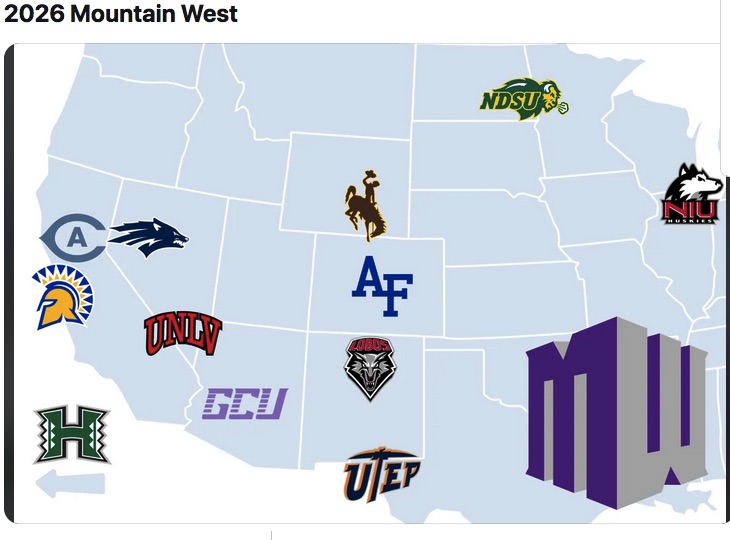
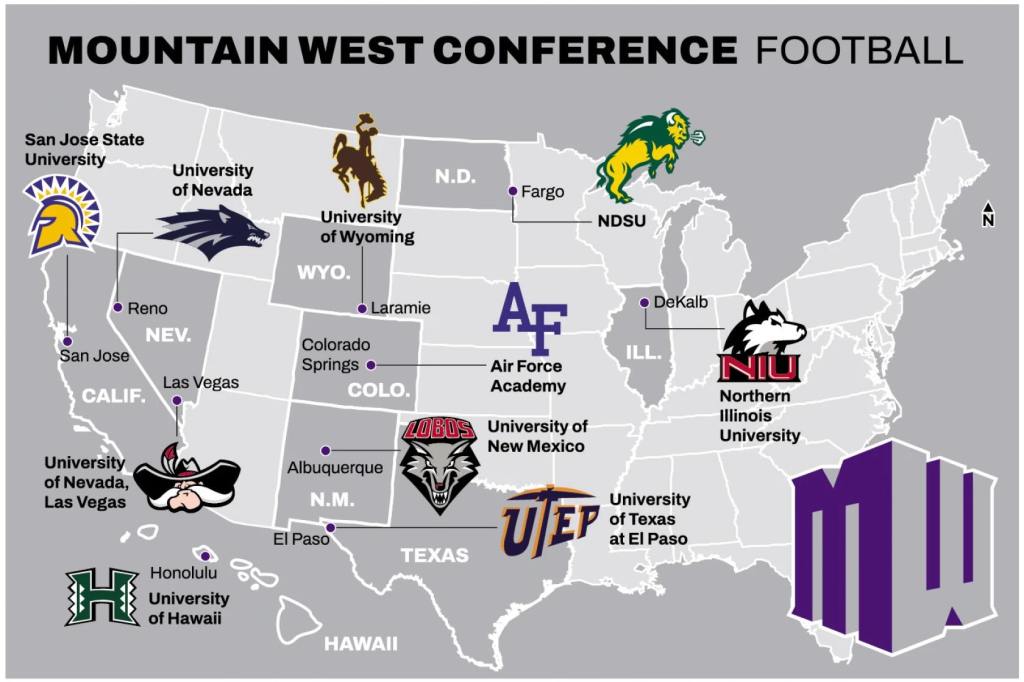
Then came the rebuild itself. The additions weren’t random. Each one filled a specific strategic purpose. On October 1, 2024 it was announced that the University of Texas at El Paso (UTEP) will be joining the Mountain West starting in the 2026–27 academic year. This major conference realignment brings several exciting changes and historical reunions: The move allows UTEP to rekindle historic rivalries with former Western Athletic Conference (WAC) foes, including Air Force, Nevada, New Mexico, San José State, UNLV, and Wyoming. As the westernmost university in the University of Texas System, El Paso, the Miners are a natural geographic fit for the Mountain West footprint. UTEP has launched initiatives to raise philanthropic funds to help make the transition a massive success.
On October 14, Craig Angelos, athletic director of football-only member Hawaii, confirmed outside reports that the school would upgrade to full MW membership in 2026. Following the expansion and reshuffling of collegiate conferences, the Mountain West added Hawaii as its eighth full-time member to solidify its NCAA FBS standing. Historically, Hawaii had to pay subsidies ranging from $150,000.00 to $175,000.00 per game to help cover travel costs for visiting conference football teams. As part of the negotiations to join as a full member, these costly fees were eliminated, freeing up significant funds for the athletic department.
On November 1, 2024, Grand Canyon University announced it was joining the Mountain West no later than July 1, 2026. On July 8, 2025, the Mountain West announced Grand Canyon would join the conference for the 2025-26 school year. Grand Canyon gave the conference instant basketball relevance and a major foothold in Phoenix. The Lopes already had one of the strongest basketball brands outside the power conferences, and their rapid athletic growth made them an ideal fit.
On December 10, 2024 it was announced that UC Davis would join the Mountain West in all sports except football, for which it will remain in the Big Sky Conference. This move is expected on July 1, 2026. UC Davis provided Northern California stability, academic credibility and eventually a pathway toward football expansion expected in 2028 or 2029.
On January 3, 2025, Northern Illinois University accepted an invitation from the MW to join for football only in 2026. NIU’s football-only membership added central time zone inventory and a valuable geographic footprint in the Chicagoland market which will help with a new media deal along with another recognizable football brand to help replace the loss of Boise State. Reports projected the Huskies could see more than $34 million in value through the agreement. Northern Illinois University’s move to the Mountain West as a football affiliate provides a multi-million dollar revenue boost, eliminates the negative effects of Tuesday and Wednesday night “MACtion,” and dramatically elevates the program’s national brand and College Football Playoff exposure.
On February 8, 2026, North Dakota State University accepted an invitation to join the Mountain West Conference as a football-only affiliate member beginning with the 2026 season. Under the terms of the agreement, North Dakota State will transition its football program from the Missouri Valley Football Conference to the Mountain West, while the university’s other sports will remain members of the Summit League. The Bison may end up becoming the smartest move the league made. NDSU brings a nationally respected football brand, a passionate fan base and exactly the type of subscription-driving audience the conference believes can thrive in a streaming-heavy future.
The Mountain West didn’t just add schools. It added inventory, identity and future growth potential. That approach eventually led to a new media rights package involving:
- CBS Sports – Will carry the men’s and women’s basketball championship games.
- Fox Sports – Retains broadcast rights for the Football Championship Game.
- The CW Network
- and streaming partner Kiswe.
The new media rights package is an incredible victory that provides the conference with much-needed stability and unprecedented linear TV exposure. By securing partnerships with CBS Sports and FOX Sports, the conference guarantees prime broadcast and cable visibility, while also expanding its reach by bringing on The CW Network and then a new streaming component. The deal mattered for more than just dollars. It represented one of the first real attempts by a conference outside the Power Four structure to fully embrace a hybrid future built around both traditional television and direct-to-consumer streaming.
The Mountain West didn’t try to outspend everyone. It tried to out-adapt them. What makes the rebuilt Mountain West fascinating is how differently it distributes value. Unlike traditional conferences, the Mountain West’s future appears increasingly tied to:
- streaming performance
- football inventory
- market engagement
- and retention incentives. ($61 Million in exit fees / $55 Million in poaching fees)
With the new deal in place the league’s projected annual distributions is expected to resemble this:
| School | 2026–27 | 2027–28 | 2028–29 | 2029–30 | 2030–31 | 2031–32 |
|---|---|---|---|---|---|---|
| Air Force | $7.68M | $7.68M | $11.05M | $11.05M | $11.05M | $11.05M |
| UNLV | $7.68M | $7.68M | $11.05M | $11.05M | $11.05M | $11.05M |
| Nevada | $6.36M | $6.36M | $7.94M | $7.94M | $7.94M | $7.94M |
| New Mexico | $6.36M | $6.36M | $7.94M | $7.94M | $7.94M | $7.94M |
| San Jose State | $6.36M | $6.36M | $7.94M | $7.94M | $7.94M | $7.94M |
| Wyoming | $6.36M | $6.36M | $7.94M | $7.94M | $7.94M | $7.94M |
| Hawaii | $5.70M | $5.70M | $6.39M | $6.39M | $6.39M | $6.39M |
| NIU | $5.67M | $5.67M | $5.67M | $5.67M | $5.67M | $5.67M |
| UC Davis | $0.40M | $0.70M | $4.00M | $5.00M | $6.00M | $6.00M |
| Grand Canyon | $1.00M | $1.20M | $1.40M | $1.60M | $1.80M | $2.00M |
| NDSU | $0.20M | $0.50M | $0.90M | $1.30M | $1.70M | $2.00M |
The irony in all of this is impossible to ignore. The Pac-12 itself died partially because schools abandoned stability in pursuit of a better future. Then, the Pac-2 turned around and destabilized the Mountain West in nearly identical fashion.
But this time, the targeted conference survived and arguably adapted faster than anyone expected. The Mountain West may never become a power conference. That was never realistic. But under Gloria Nevarez, it became something else:
- financially creative
- strategically flexible
- streaming-forward
- and surprisingly resilient.
The 2026 Mountain West football season is shaping up to be one of the most dynamic in football, featuring a heavily retooled 10-team lineup. The conference is bringing in new programs while transitioning to a fresh slate of matchups and a new media rights package that provides stability. In the end, survival itself may have been the conference’s biggest win.


Leave a comment